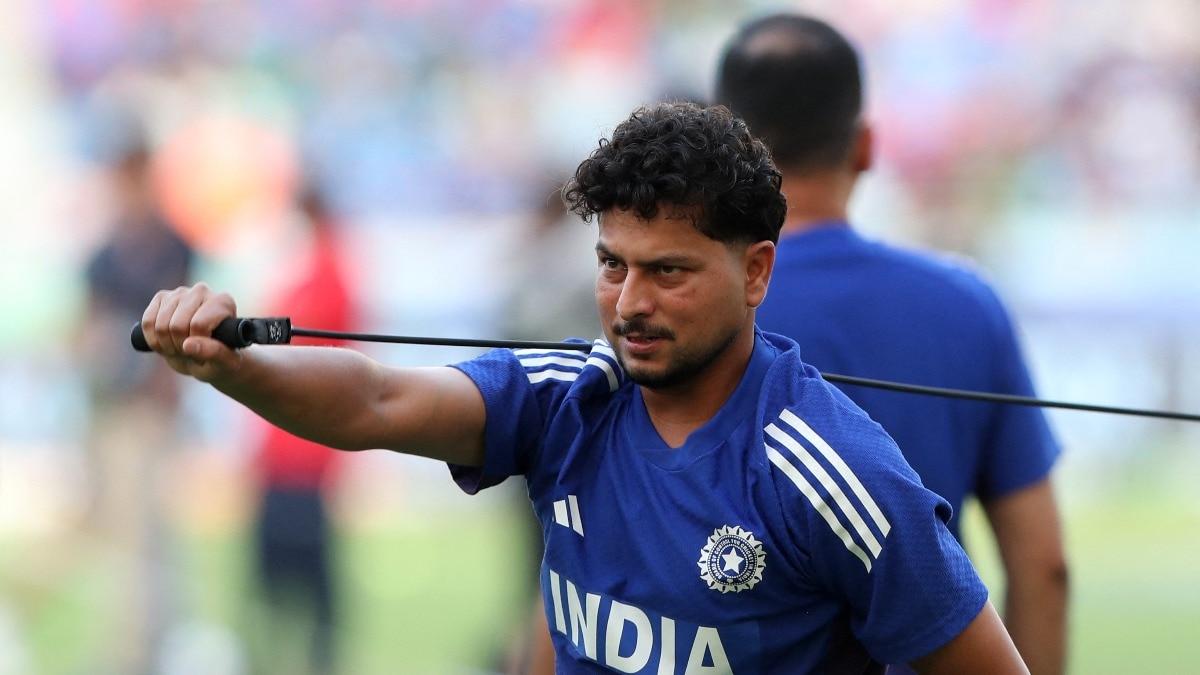
India’s opening One-Day International against England saw a surprising development as left-arm wrist spinner Kuldeep Yadav was omitted from the playing XI. With the selectors favouring multiple bowling all-rounders, this decision has stirred debate across social media and cricketing circles. Here’s a closer look at what shaped the team’s composition and what it means for Kuldeep’s future in white-ball cricket.
Under the guidance of new management led by head coach Gautam Gambhir, India’s limited-overs strategy has tilted increasingly towards batting depth and seam-bowling versatility. In the first ODI against England at Trent Bridge, the squad featured four all-rounders alongside specialist pacers. This balance offers greater cover for middle-order resilience and seam options in varied conditions, but leaves spinners like Kuldeep on the bench.
Despite a rich track record in ODIs—where Kuldeep once formed a formidable spin duo with Yuzvendra Chahal—his recent performances have been a mixed bag. In the preceding ODI series against the West Indies, he captured nine wickets in five matches but conceded runs at over six an over. Meanwhile, wrist spin rival Ravi Bishnoi has impressed with tight spells in the T20 format, earning him a red-ball call-up for the ODIs. The emergence of part-time spinners and batting all-rounders has further crowded the spin department.
Speaking after naming the squad, a BCCI official explained that conditions in England demand seamers who can bat a few overs, as well as power-hitting depth. “We wanted to pick more bowling all-rounders who can chip in,” the source said. “That means someone has to miss out, even if they are a proven match-winner.” With Ravindra Jadeja back in full fitness and Axar Patel available, the left-arm spin slot felt sufficiently covered without Kuldeep’s wrist spin.
Reactions on social media were swift. Fans questioned whether an all-rounder obsession might cost India the wonderful variations that wrist spin brings. Former cricketers pointed out that Kuldeep’s ability to extract turn on slow tracks remains vital. At the same time, others argued that in English conditions, accuracy and lower economy rates from seam-bowling options could prove more decisive.
With two more ODIs and three T20Is lined up in this England tour, Kuldeep’s chances of featuring later depend on pitch conditions and match context. If the venues favour slow, turning pitches—like at Old Trafford or Lord’s—the management may well reconsider their combination. For now, Kuldeep must wait in the wings, stay sharp in the nets, and hope for an opportunity to showcase the variations that once made him India’s premier wrist spinner.
India’s selection gamble underscores a broader shift towards multi-dimensional cricketers in limited-overs formats. Whether this results in more rewards from seam-all-rounders or whether wrist spinners like Kuldeep Yadav regain their place remains to be seen. One thing is clear: as Team India adapts to different conditions, every selection call will be scrutinised, and the competition for spots will only intensify.
The next ODI takes place at Old Trafford on July 17. Stay tuned for more updates on squad changes, match excitement and expert analysis as the series unfolds.
Ishan Kishan’s brilliant century anchored East Zone’s commanding position on Day 1 of the Duleep…
Former West Indies great Brian Lara urges authorities to ensure top-notch medical care for Imran…
India’s women’s cricket team dismantles Pakistan for just 55 in an Asia Cup T20 clash,…
England pacer Brydon Carse has been left out of the Sri Lanka series to focus…
Cricket Association of Bengal will felicitate fast bowler Mohammed Shami on completing 100 first-class matches…
Pakistan Cricket Board has sent wicketkeeper-batter Mohammad Rizwan and opener Imam-ul-Haq home amid concerns around…