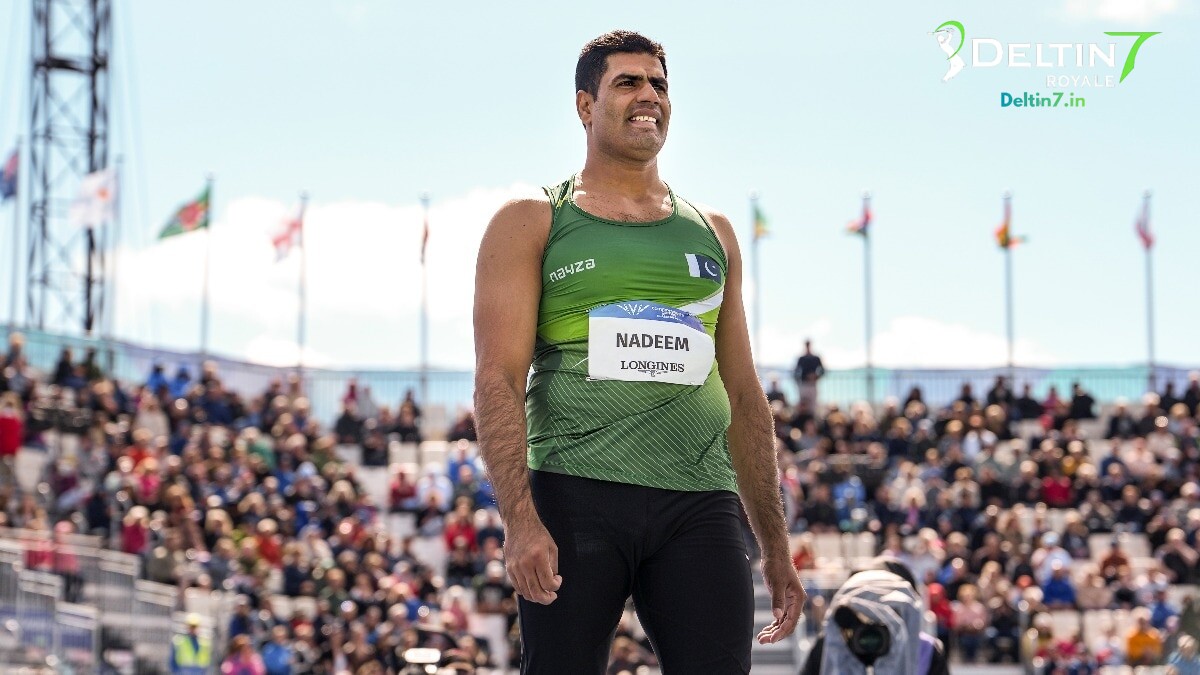
India’s sporting enthusiasts have watched Pakistan’s javelin sensation Arshad Nadeem rise to global attention, yet even before the Commonwealth Games 2026, the 28-year-old finds himself battling more than just competitors on the field. Despite earning medals at major events, systemic lapses in his homeland’s sports governance have jeopardised his preparation for one of the key fixtures on the international calendar.
One of the primary challenges Nadeem faces is irregular funding. While established federations regularly disburse training grants and cover international travel, Pakistani authorities have repeatedly delayed approvals. Without a steady stream of financial support, securing high-performance coaching, medical backing and world-class equipment becomes an uphill task. From an Indian perspective, such administrative red tape contrasts sharply with smoother processes at home.
Another area of concern is the lack of specialised training facilities in Pakistan. Top javelin throwers require access to well-maintained runways, wind tunnels and recovery suites. Reports suggest that Arshad often trains in multi-discipline complexes that are ill-equipped for elite javelin preparation. In India, the rise of dedicated athletics centres has raised domestic standards and contributed to multiple podium finishes internationally.
India’s success in track and field owes much to structured talent development pathways. Contrastingly, Pakistan’s coaching framework remains fragmented, with talented athletes sometimes moving abroad for guidance. Even though Arshad has briefly trained under European coaches, irregular scheduling and bureaucratic obstacles have limited the impact. Without a long-term mentorship strategy, nurturing consistent performance becomes a challenge.
For any athlete, frequent competition at top-tier meets is vital for sharpening skills and gaining confidence. Pakistani authorities have been slow in sending athletes to lucrative international circuits where sports action and match excitement build resilience. Meanwhile, Indian athletes routinely participate in Diamond League meets and continental championships, gaining invaluable experience ahead of marquee events like the CWG.
High-performance sport now relies heavily on personalised nutrition plans, injury prevention protocols and data-driven training. In Nadeem’s case, limited access to sports science experts has been another stumbling block. Comparatively, India’s growing emphasis on athlete wellness—with dedicated physiotherapy centres and dietitians—showcases the difference that modern support systems can make.
Beyond physical preparation, mental resilience plays a crucial role in javelin events. While many federations, including India’s, employ sports psychologists to equip athletes for high-pressure moments, Pakistani authorities have not institutionalised such services. Addressing anxiety, focus and competitive mindset remains largely ad hoc, leaving Nadeem to navigate the mental demands of elite competition without consistent guidance.
As the Commonwealth Games 2026 draw near, Arshad Nadeem’s situation underscores broader lessons for regional sports bodies. Unified planning, predictable funding, state-of-the-art infrastructure and holistic athlete care are non-negotiable for podium success. For India, this serves as a reminder to continue strengthening its own ecosystem, turning match excitement into sustained rewards on the global stage.
Arshad Nadeem possesses the talent to shine at CWG 2026, but systemic barriers in Pakistan threaten to dim his potential. For Indian sports enthusiasts and policy-makers alike, his story is a case study in the importance of robust support systems. As we cheer for every piece of sporting action and future match excitement, let this be a prompt to champion better structures across borders—so every athlete can truly compete on equal footing.
Ishan Kishan’s brilliant century anchored East Zone’s commanding position on Day 1 of the Duleep…
Former West Indies great Brian Lara urges authorities to ensure top-notch medical care for Imran…
India’s women’s cricket team dismantles Pakistan for just 55 in an Asia Cup T20 clash,…
England pacer Brydon Carse has been left out of the Sri Lanka series to focus…
Cricket Association of Bengal will felicitate fast bowler Mohammed Shami on completing 100 first-class matches…
Pakistan Cricket Board has sent wicketkeeper-batter Mohammad Rizwan and opener Imam-ul-Haq home amid concerns around…